I keep coming back to a question that feels a little uncomfortable to say out loud.
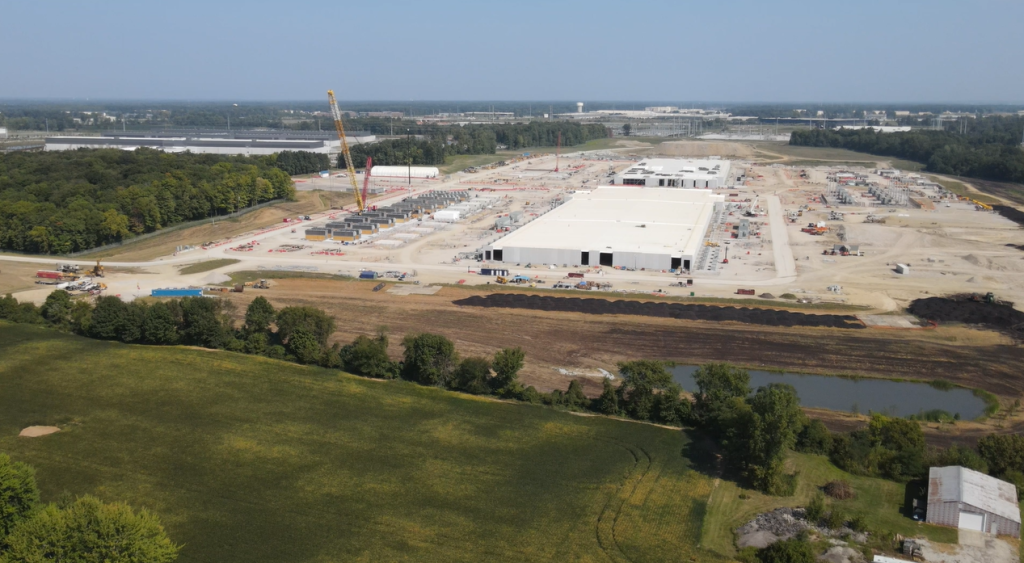
What if the Intel chip foundry in Central Ohio never opens?
Not delayed.
Not scaled back.
Not “waiting on market conditions.”
What if it’s actually canceled?
Every time I raise this, the response is usually immediate.
“That won’t happen. Too much is invested.”
I get it. I want that to be true. But hope alone doesn’t build economies. And history,
especially economic history, has a way of humbling regions that mistake momentum for
certainty.
Intel has already slowed the Ohio timeline multiple times, cut tens of thousands of jobs
globally, and paused or canceled other manufacturing investments abroad. That’s not
speculation. That’s documented reporting.¹ ² ³
So instead of pretending the risk doesn’t exist, I want to talk honestly about what
cancellation would mean for Central Ohio’s economy and, more importantly, for
our technology hiring pipeline.
The First Answer I Always Hear: Jobs
When I ask this question, the first response is almost always the same.
“We’d lose jobs.”
That’s true. And it wouldn’t be trivial.
Thousands of direct Intel roles would disappear before they ever exist. Construction
jobs tied to the site dry up. Supplier contracts vanish. Revenue projections no longer
materialize. Even delays, short of cancellation, have already created real uncertainty for
workers, local governments, and businesses that planned for growth.²⁴
But if I stop the conversation at jobs, I think I miss the real issue.
The Bigger Loss Isn’t Jobs : It’s the Talent Loop
Here’s the part I can’t shake.
The most serious impact wouldn’t show up immediately on a labor report or a budget
spreadsheet. It would quietly show up over time in our technology hiring pipeline.
Right now, Central Ohio has aligned:
- K12 STEM initiatives
- Community college certifications
- University research programs
- Workforce retraining efforts
All with advanced manufacturing and semiconductors in mind.
If the anchor employer never arrives, we’d still be producing talent but without a local
destination.
Economic geography research has a name for this: Satellite Platform Regions. Places that train people locally, then export them elsewhere to build careers.⁵
That’s the part that worries me.
Trust Is Part of the Labor Market
Hiring pipelines run on trust.
Trust that:
- The jobs will exist
- The career ladders will form
- The investment in skills will pay off locally
When a highly visible anchor project collapses after institutions and communities
reorganize around it, confidence erodes not just in one company, but in the region’s
long-term story.
Research shows that when trust breaks, startups hesitate, suppliers pull back, and
entrepreneurs wait on the sidelines. Ecosystems thin out before they ever get the
chance to mature.⁶ ⁷
And the Money Already Spent Doesn’t Disappear
Another question I keep asking myself:
What happens to all the upfront investment if the anchor never arrives?
Because roads still get built. Utilities still get expanded. Housing still goes up. Schools
and workforce programs still scale.
What doesn’t materialize are the multipliers, wage growth, supplier velocity, and local
decision-making power that turn infrastructure into long-term prosperity.
Even now, before any cancellation, state leaders are raising concerns about delayed
benefits relative to committed public dollars.⁴
That tension doesn’t resolve itself if the project disappears.
Am I Saying Central Ohio Would Collapse? No.
I want to be very clear about this.
If the Intel plant were canceled, Central Ohio wouldn’t fall apart. This region has real
strengths: talent, logistics, healthcare, higher education, cloud infrastructure, and
defense manufacturing.
But research on anchorfirm loss shows there are different futures depending on how
regions respond.⁷ ⁸
Some become excellent talent exporters, stable, respectable places that train people
who then leave.
Others deliberately rebuild around multiple anchors, spread across sectors. That path is
slower, messier, and less flashy, but more resilient if it’s intentional.
Spinoffs can happen. New anchors can emerge. But they don’t appear automatically.
Regions that recover plan for anchorship.⁶
So Here’s the Question I’m Actually Asking
For me, the question is no longer just:
“Will Intel build?”
The real question is:
If Intel doesn’t, do we have a plan to keep the talent, institutions, and momentum
we’ve already activated from scattering?
Because regions lose decades by being unprepared for reality.
Final Reflection
If the Intel chip foundry never opens:
- Yes, jobs are lost but momentum is what’s really at risk
- The technology hiring pipeline becomes leaky instead of circular
- Central Ohio risks becoming a training ground for someone else’s economy
The research is consistent on this point:
Regions recover from anchorfirm loss only when they replace anchorship.
This is a call to think like stewards.
Sources & References
1. Intel global restructuring and Ohio slowdown – Thomasnet (2025)
2. Spectrum News: Intel delays Ohio chip plant (2025)
3. TECHi: Intel layoffs and factory freezes (2025)
4. The Investors Chronicle: Ohio delays and public investment concerns (2025)
5. Wolf, C., “Anchor Firms and Satellite Platforms,” Journal of Economic Geography (2025)
6. Fukushima et al., “Spinoffs After Anchor Firm Closure,” Springer (2025)
7. Ornston & Camargo, The Large Firm Dilemma, ResearchGate
8. FRIDA Project, EU Commission: Anchor Firms & Regional Development

